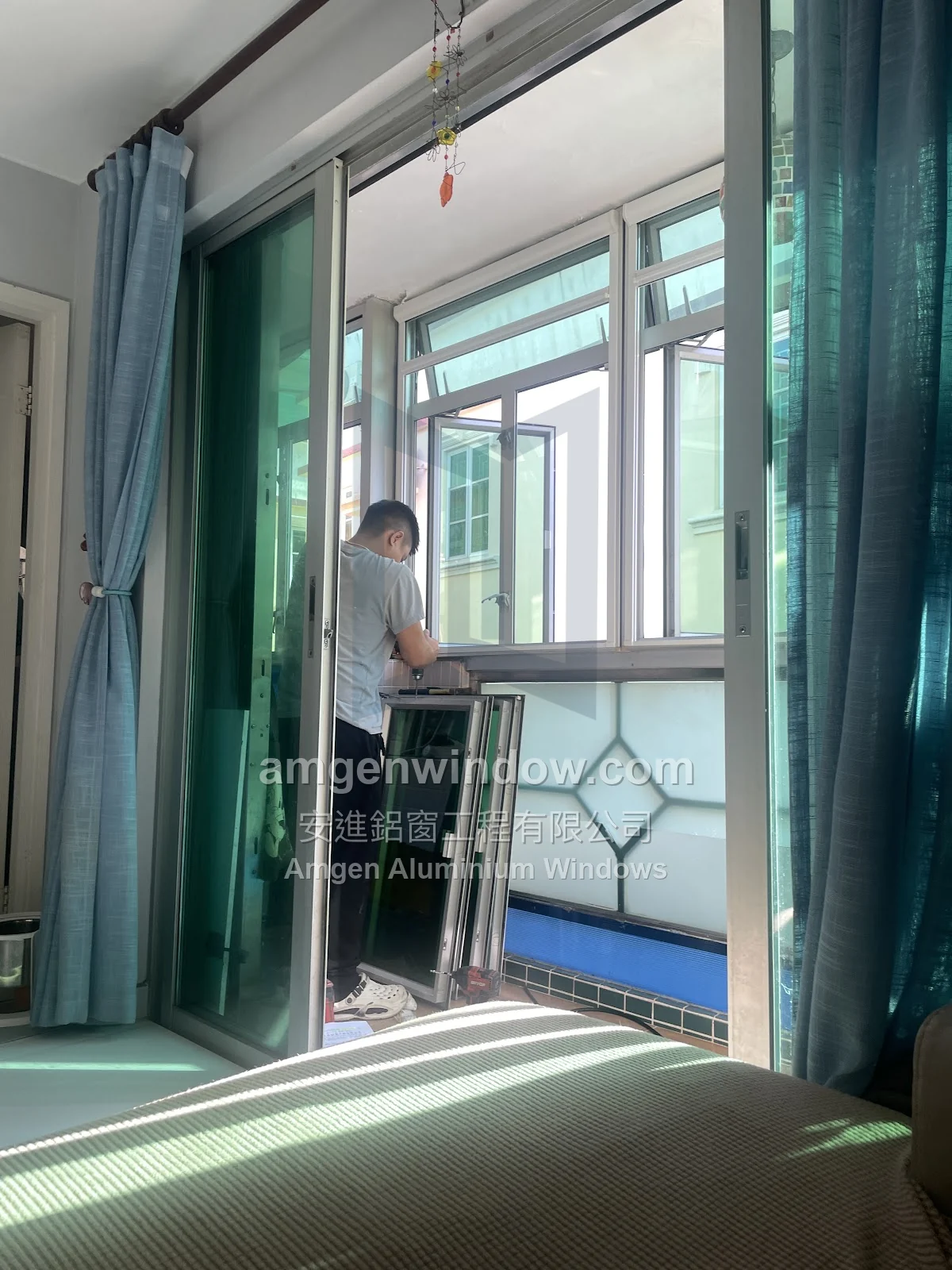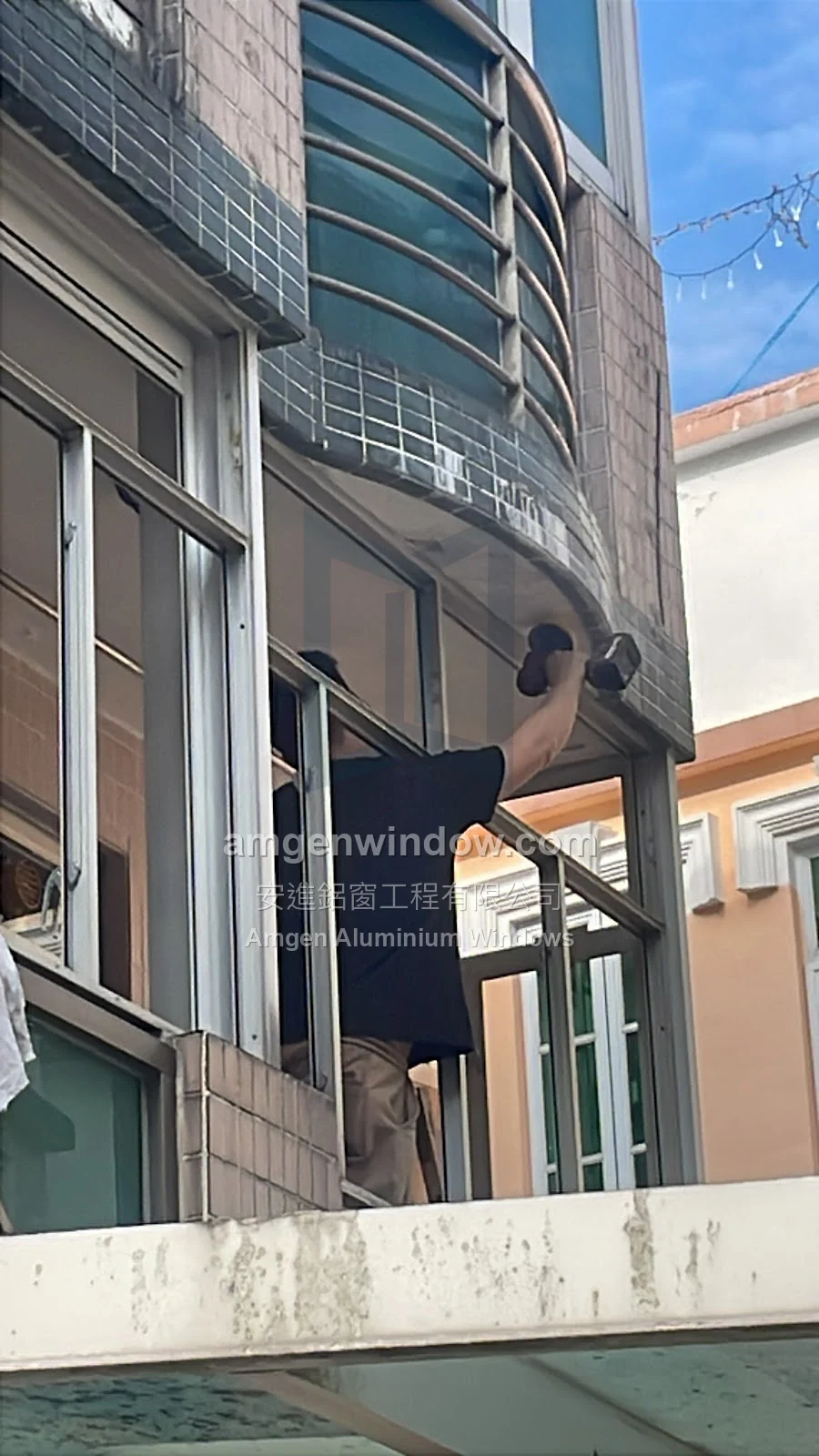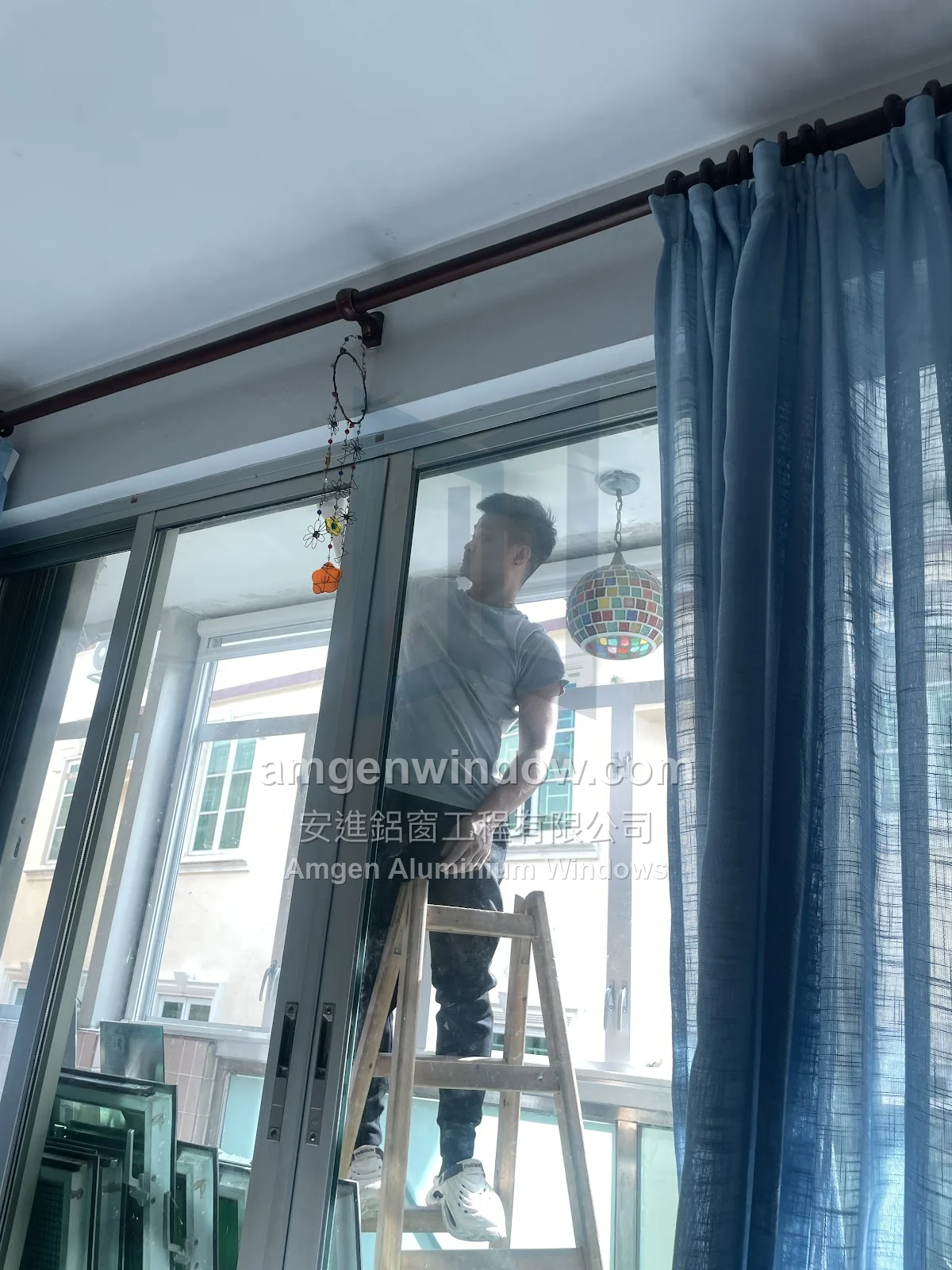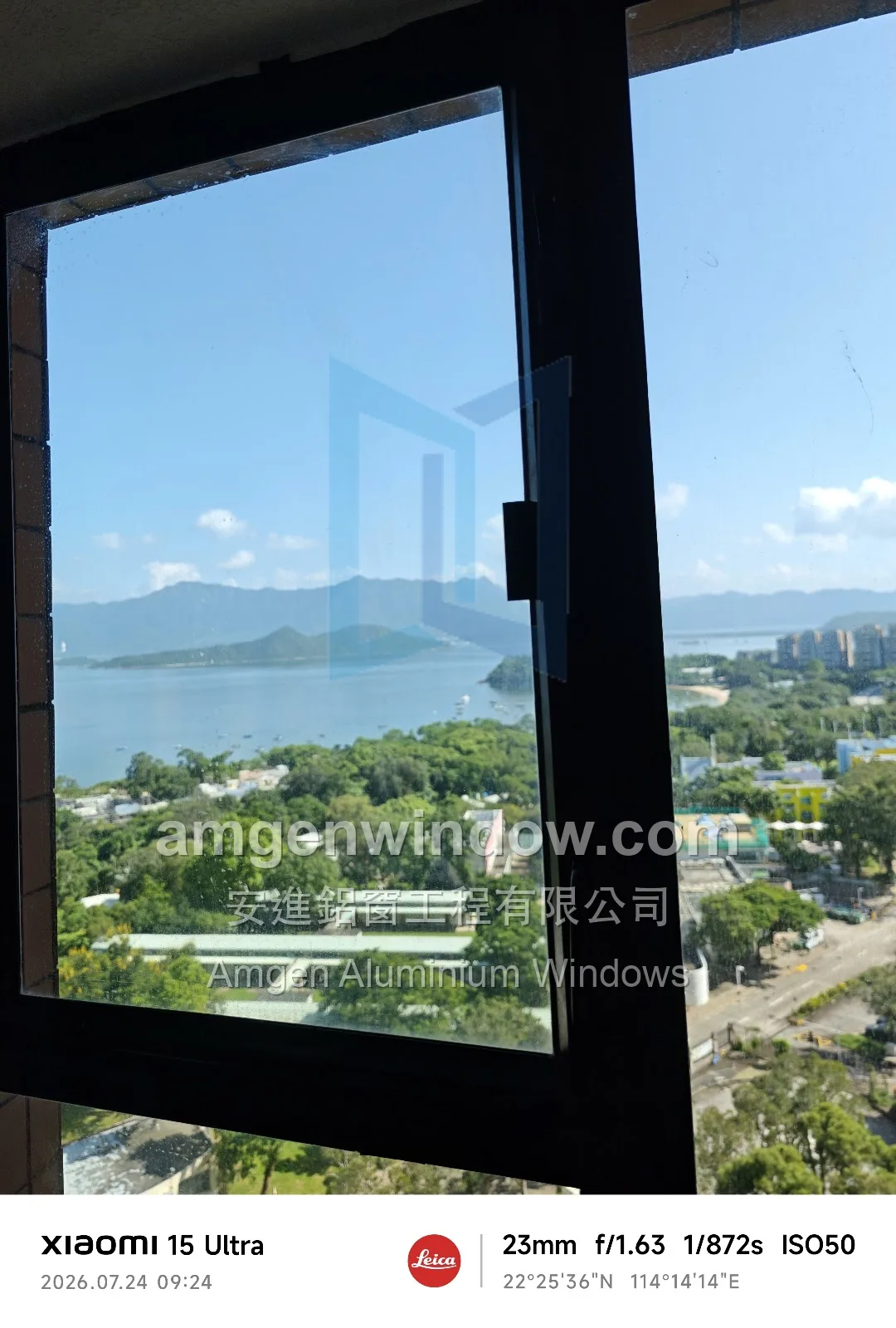
Every time the Observatory hoists a typhoon signal, hardware shops sell out of window tape and social media fills up with diagrams showing how to apply it. But does taping actually save a pane of glass? The answer runs contrary to what most people believe. This article explains how glass really breaks in a typhoon, why tape does not help and can make things worse, and what is genuinely worth your time before the storm arrives.
Why window tape does not work: how glass actually breaks
Glass breaks in a typhoon for two main reasons, and tape stops neither of them.
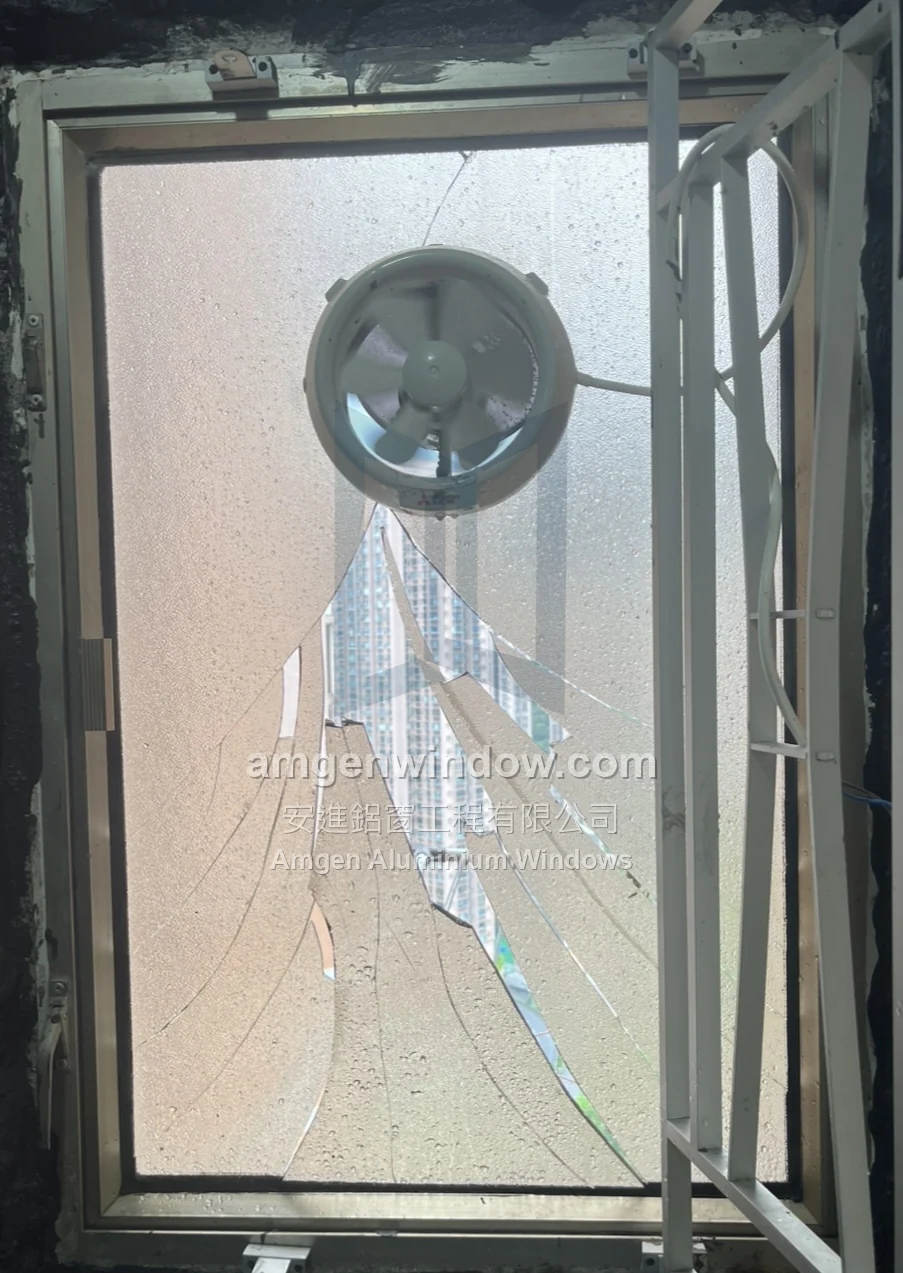
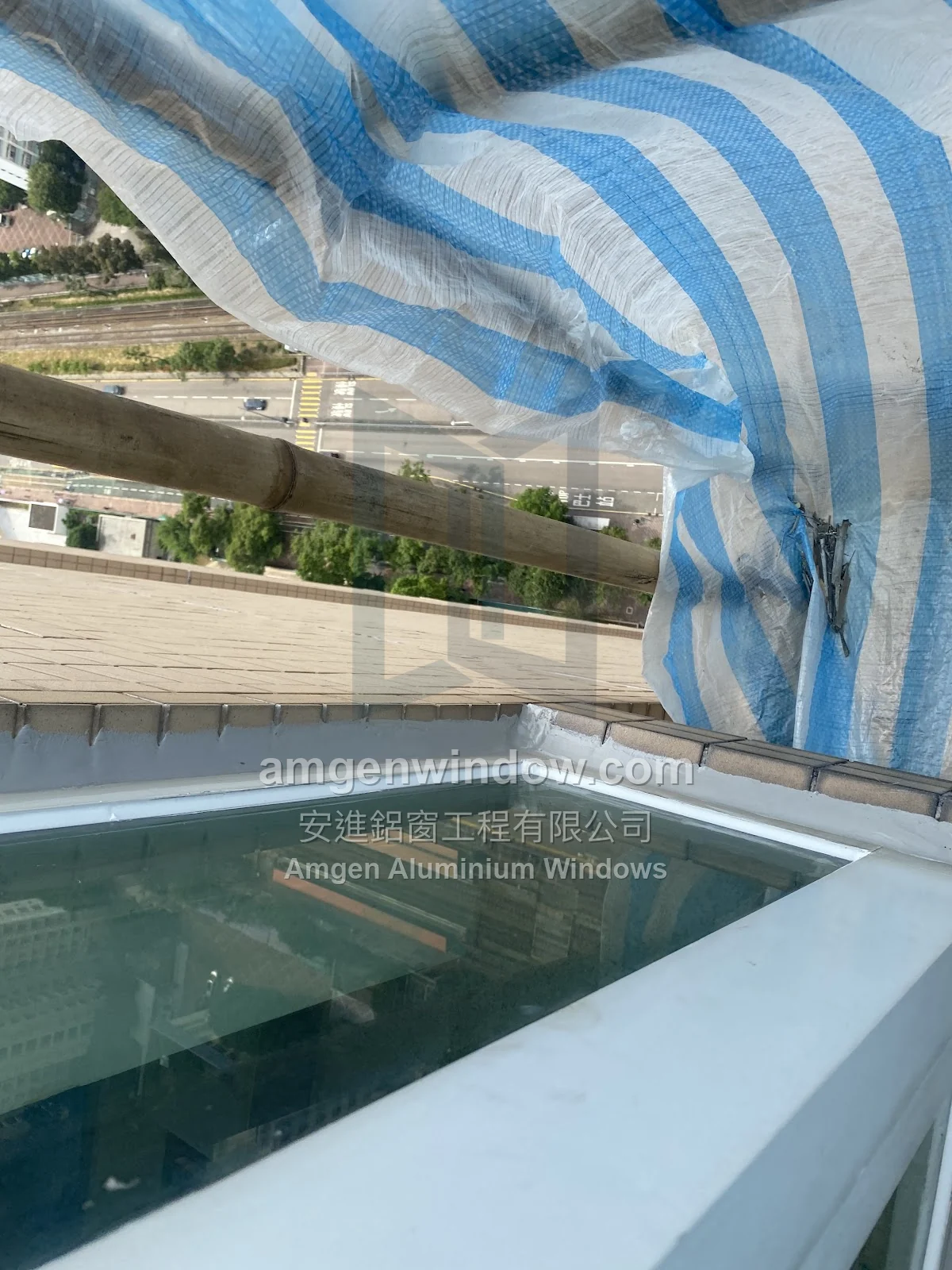
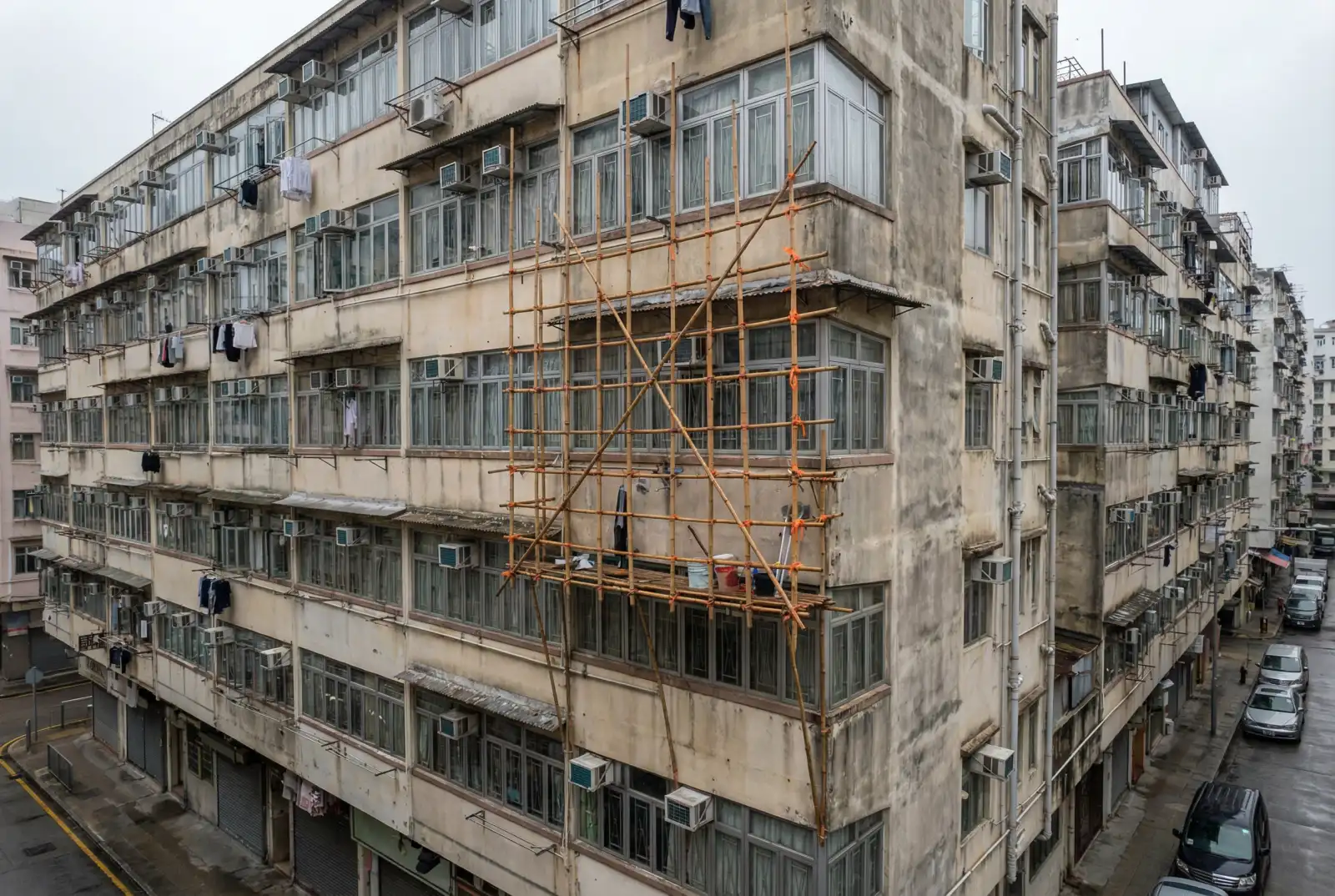
The first is flying debris. High winds pick up bamboo scaffolding poles, fragments of signage and objects left on balconies, and drive them into the glass at speed. That impact is far beyond anything a strip of tape can absorb.
The second is wind pressure difference. Wind builds pressure on the outside of the window, the pressure inside and out no longer matches, and the glass or the whole sash is pushed out of shape. What actually carries that load is the thickness of the glass, the frame structure, the hinges and the locking points. Tape sits on the surface of the glass and carries none of it.
Overseas meteorological authorities established years ago that taping glass offers no protection. Hong Kong is no different: tape neither stops flying debris nor shares the wind load.
Three real risks of taping
Taping is not merely useless — it can make the outcome worse.
One: the fragments get bigger. Once the glass breaks, the tape holds the pieces together as a single slab that falls as one. Compared with small fragments, a large piece with sharp edges does far more damage — which is precisely why many in the trade advise against taping.
Two: it cancels out what toughened glass is designed to do. Toughened glass is designed to break into small granules on impact, reducing the risk of laceration. Taping it removes that safety behaviour.
Three: removing it damages the window. Adhesive residue baked on by the sun is very hard to remove, and owners scraping it off with blades frequently scratch the glass or the aluminium frame.
Cross, X or grid — does the tape pattern make a difference?
No. The cross, the X and the grid have all circulated online for years, and all three are equally close to useless.
The reason is simple: the tensile strength of tape is negligible next to glass, and it sits on the surface rather than within the structure. Whatever pattern you make, the stress distribution across the glass under load is essentially unchanged.
What must not be confused with tape is professionally installed safety film. Safety film is a polyester membrane of real thickness bonded across the whole pane, which holds fragments in place when the glass breaks. It is a product that genuinely works — but only when applied properly across the full pane, and clear packing tape is no substitute for it.
What actually works: five checks before a typhoon
Rather than spending time on tape, spend it on these five things — the parts that actually carry the wind load.
Step 1: Confirm every window closes and locks properly. With the window shut, check for gaps between sash and frame, and whether the handle turns smoothly into its locking point. A loose or snapped handle lets the sash blow open in strong wind, and that is the most common starting point for both water ingress and a falling sash.
Step 2: Check the hinges. The hinges carry the weight of the entire sash. If they have oxidised or loosened, or the window feels stiff and the sash has dropped, there is a real risk in high wind. For the warning signs in detail, see five warning signs of oxidised, failing hinges.
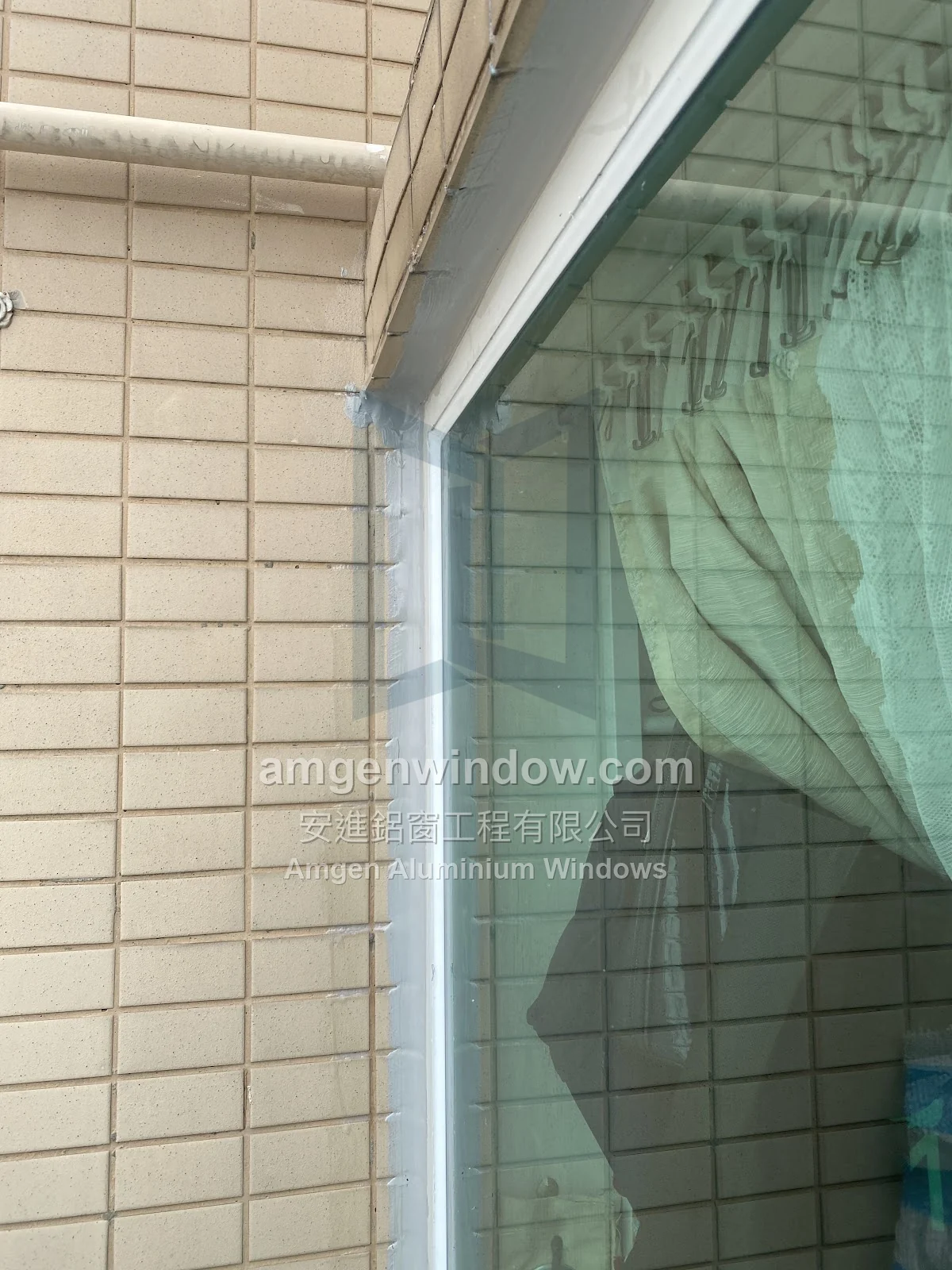
Step 3: Check the sealant strips. Strips that have hardened, contracted or melted will let in draughts and water even with the window shut. Note, though, that a strip's job is sealing, not impact resistance — it deals with water ingress, not glass safety.
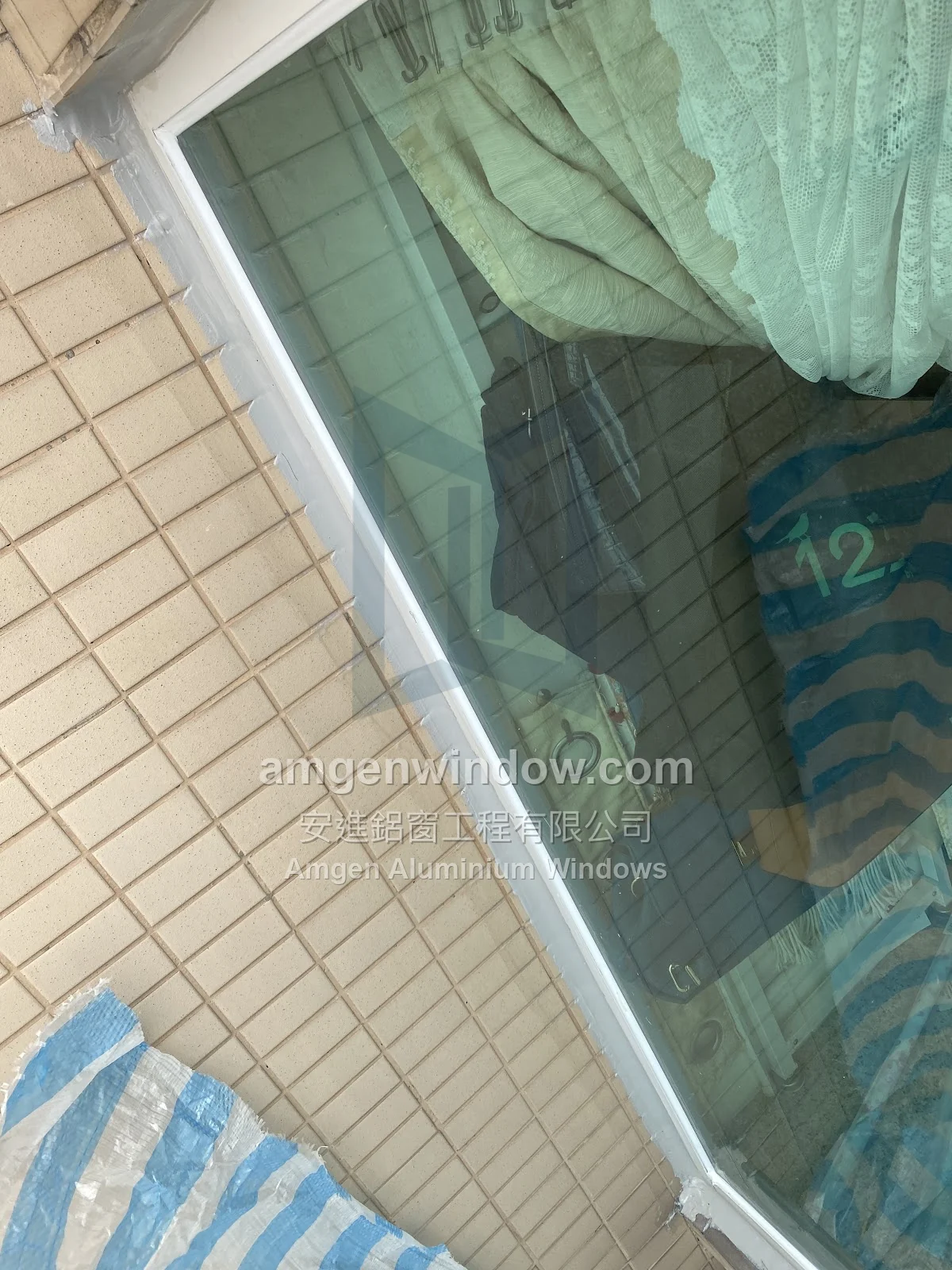
Step 4: Check the glass itself. Look carefully along all four edges for cracks or chipped corners. Glass that is already cracked spreads readily under wind pressure and should be replaced before the typhoon, not covered over with tape.
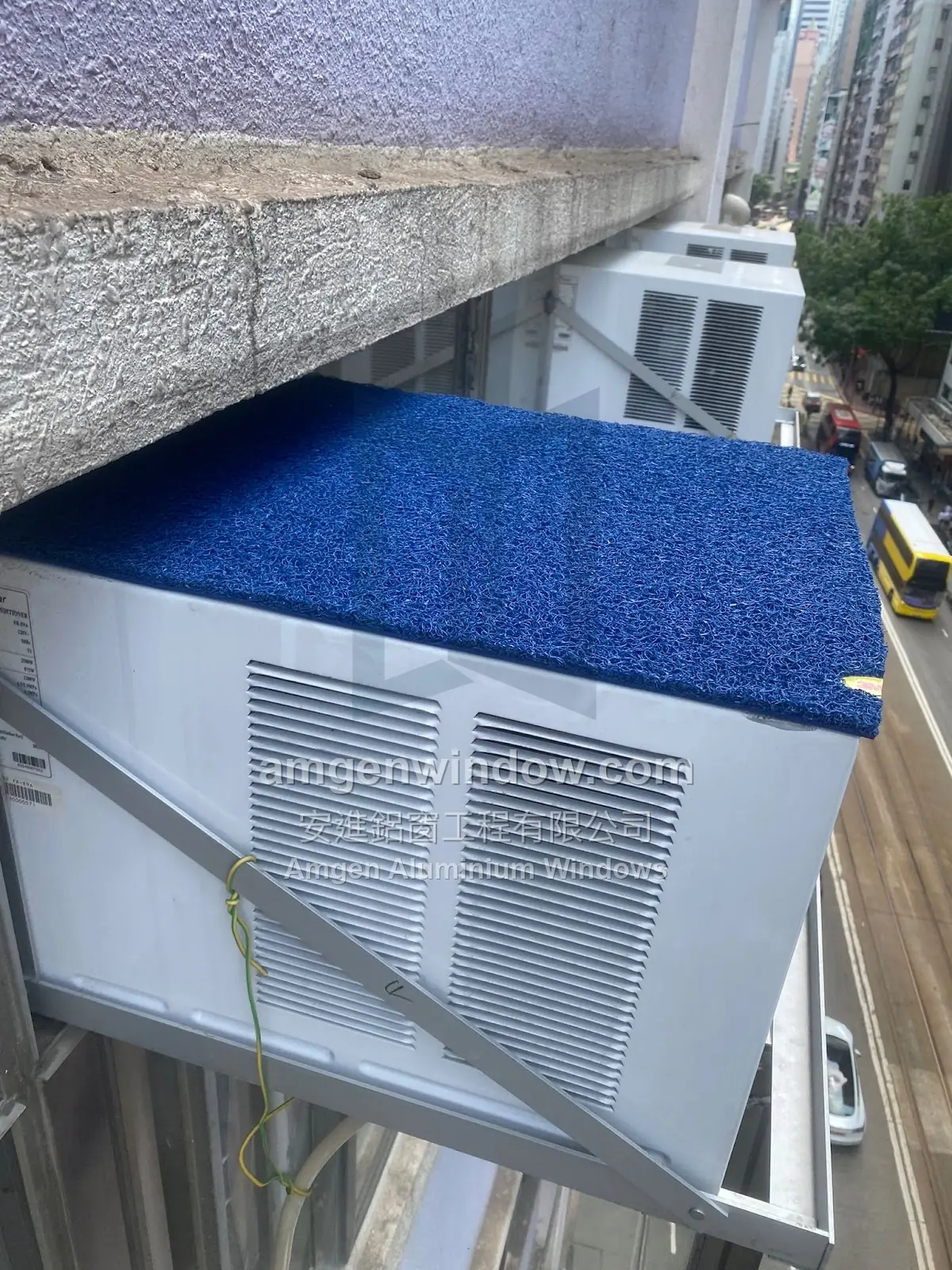
Step 5: Clear objects from outside the window and the balcony. Flying debris is the main cause of broken glass. Plant pots, drying racks, loose items and insecure air-conditioner brackets deserve attention well before your own pane does.
For the full list of checks, see the pre-typhoon aluminium window maintenance checklist.
A real scenario: finding a window that will not shut, the night before
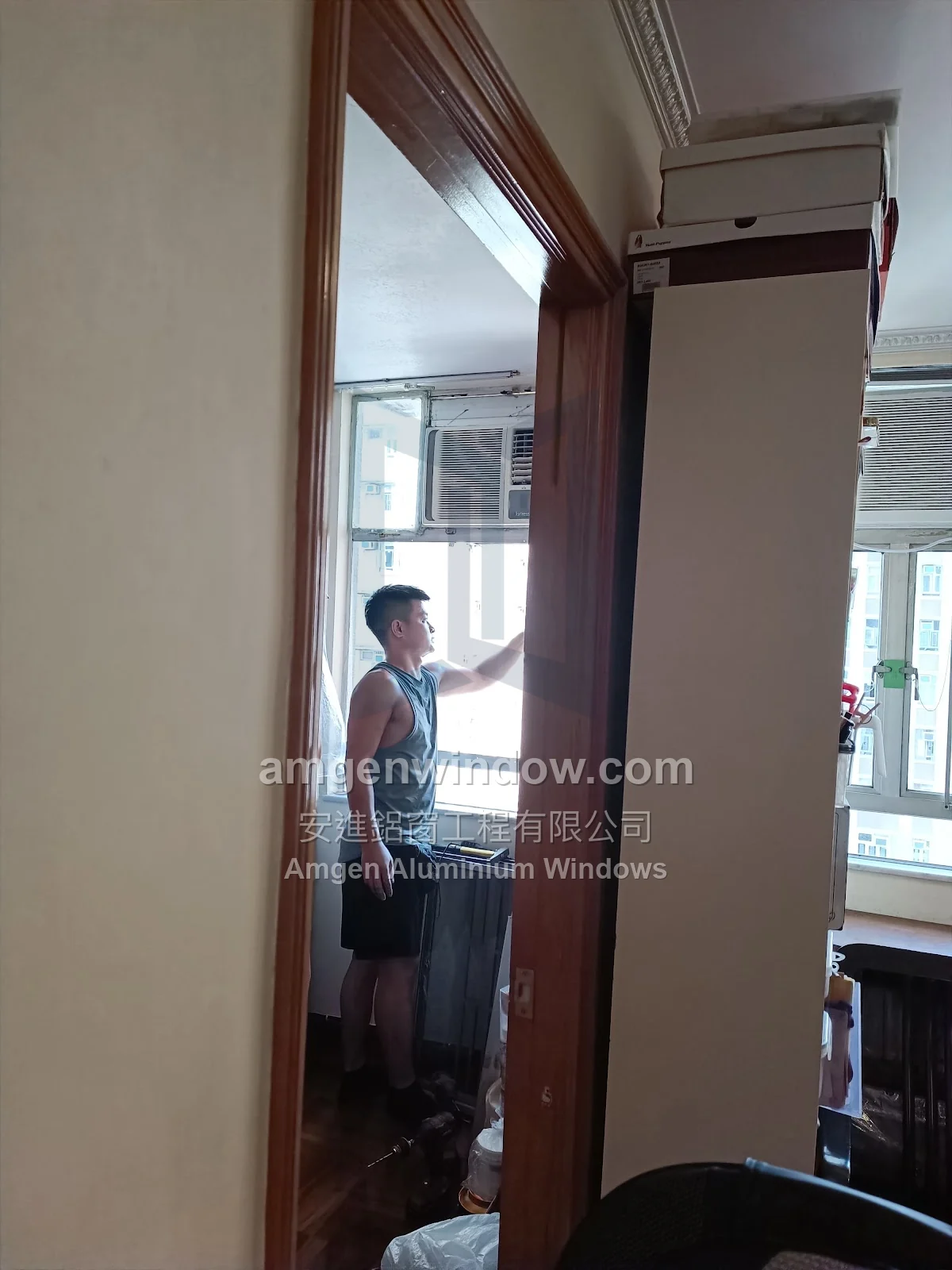
A Kwun Tong owner closing up the night before a No. 8 signal found that one bedroom window would not shut fully however hard he pushed, leaving a visible gap between sash and frame. His first instinct was to go downstairs and buy tape.
The problem was not the glass but the hinges — once oxidised, the hinge loosens, the sash drops as a whole, and the locking point no longer lines up. Tape on the glass does nothing about a sash blowing open.
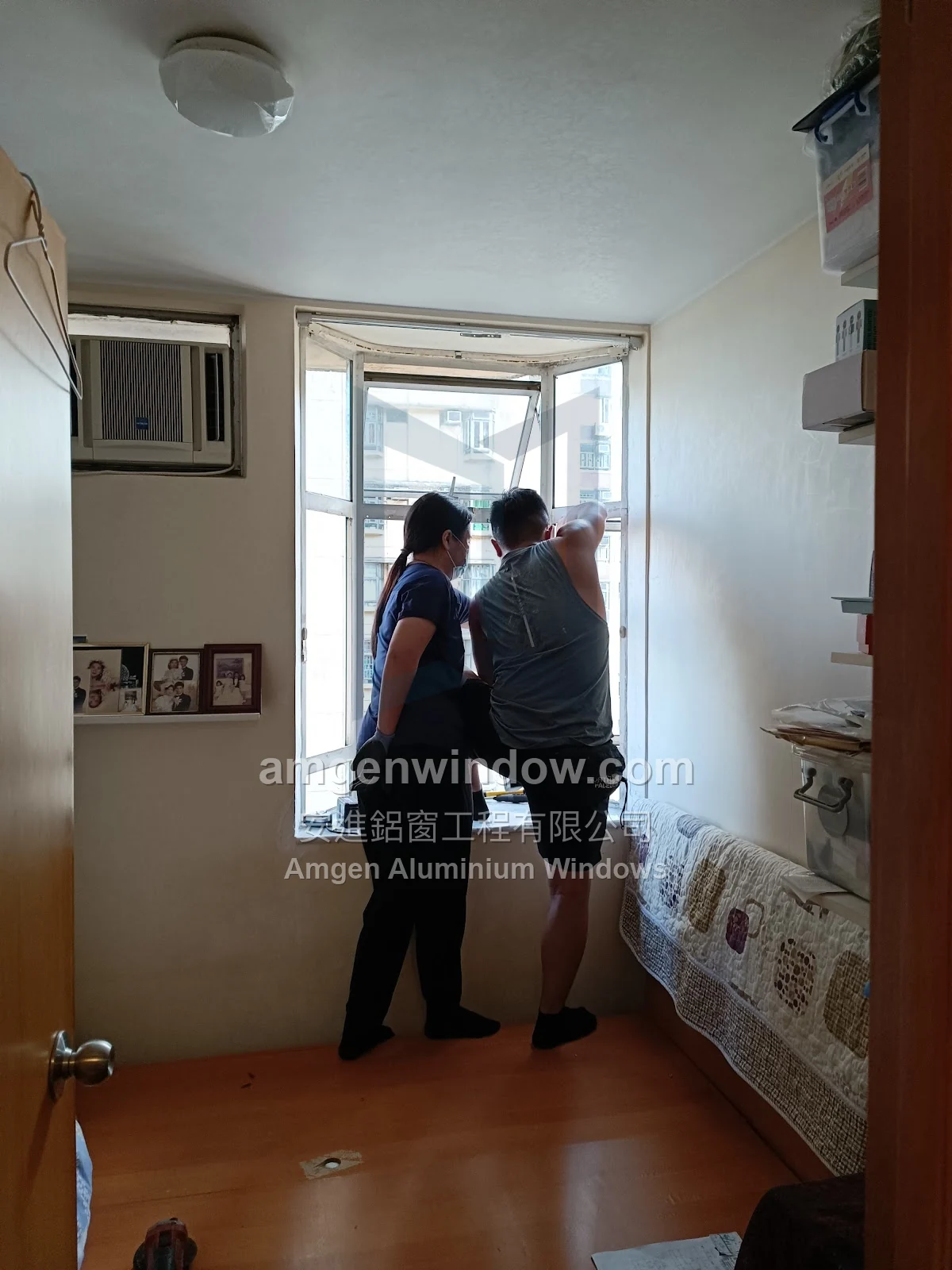
That night he wedged the sash shut with something heavy instead, and arranged for a technician once the signal was lowered. On inspection, the hinges on two other windows in the same flat had also begun to oxidise, so all three were dealt with together. Cases like this are not unusual — see this real falling-window incident.
What to check after the typhoon
Once the signal is lowered, several things are worth checking even if the windows look intact:
If any of these appear, arrange an inspection early. Dealing with a small problem before the next signal costs far less than dealing with it afterwards.
Frequently asked questions
Is taping really unnecessary before a typhoon?
As a way of preventing the glass breaking, yes — it does nothing. A window that is structurally sound and closes and locks properly is already more effective than any amount of tape. Time spent checking hinges and handles, and clearing objects outside the window, pays back far more.
I have already taped the windows — should I remove it?
Remove it soon after the signal is lowered, before the sun bakes the residue on. A hairdryer to warm it gently, or a proper adhesive remover, works well; scraping with a blade is not advisable, as it scratches glass and aluminium.
A window will not shut properly and the typhoon is coming — what can I do now?
Temporary measures include wedging the sash shut with something heavy, drawing the curtains to reduce flying fragments, and staying away from that window. These are stopgaps only: arrange aluminium window repair as soon as the signal is lowered to deal with the cause. Amgen offers 24/7 emergency repair with priority response through the typhoon season, May to November.
How often should windows be fully inspected?
Private buildings aged 10 years or above fall under the Buildings Department's Mandatory Window Inspection Scheme and require a prescribed inspection every 5 years. For routine care, check the windows yourself once a year before the typhoon season, in April or May.
In closing: spend the time where the load actually is
Window tape is popular because it is cheap, quick, and lets you see that you have done something. But what actually protects you in a typhoon is the load-bearing capacity of the hinges, the locking points of the handle, the condition of the glass, and whether there is anything outside your window that the wind can pick up.
Amgen Aluminium Windows holds licence MWC 316/2021 and provides mandatory window inspection with free on-site assessment across all 18 districts of Hong Kong. If you are unsure whether your windows will stand up to the next signal, WhatsApp us on 6586 3435 — our technician can check each window's hinges, handle and seals on site.

Want to know what the repair costs?
Pick the parts giving trouble and how many, and it becomes a clear enquiry — no need to describe it yourself.
Start a repair quote