
Aluminium Window 40-Series or 50-Series? Hinge Grades and the Hidden Specs to Check Before Replacing (With a Real Breakage Case)
When replacing windows or renovating a whole flat, owners tend to focus on style, colour and glass, while overlooking two invisible specs that truly decide a window's lifespan — the aluminium extrusion thickness (commonly called the "material series") and the hinge grade. Two windows that look alike may differ hugely: one built with full-spec material lasting decades, the other failing within a year or two. This article breaks down the difference between material series and hinges, and — through a real case from a Quarry Bay commercial building — explains why you should engage a professional window inspector before replacing your windows.
Only Looking at the Appearance? Lifespan Is Decided by the "Hidden Specs"
Once aluminium windows are installed, what an owner can judge by eye is mostly the style, colour and whether the glass is clear. But what really determines whether a window can withstand a typhoon, and how many years it lasts, are two specs buried in the details: the thickness of the aluminium and the material grade of the hinge.
These two specs are not always clearly stated on a quote, yet the price difference is significant. To keep quotes low, some contractors cut corners where you can't see — using thinner aluminium and lower-grade hinges. Owners can't tell at signing; often the problem only surfaces a year or two later, or after a single typhoon.
Understand how to distinguish and choose these two specs, and you won't decide on price and appearance alone.
Hidden Spec One: Aluminium Thickness (How to Choose Between 40-Series, 50-Series and 60-Series?)
What Hong Kong commonly calls the "material series" refers to the cross-section series of the aluminium window frame profile. The larger the number, the thicker the frame body usually is and the stronger the structure. Common ones include 40-series, 50-series and 60-series — this is exactly what owners searching "difference between 40-series and 50-series aluminium windows" want to clarify.
| Material series | Characteristics | Wind-pressure resistance | Suitable scenarios |
|---|---|---|---|
| 40-series | Thinner frame, less material | Average | Low floors, inner courtyards, sheltered positions |
| 50-series | Thicker frame, more stable structure | Better | Mid-to-high floors, windward units (mainstream choice) |
| 60-series and up | Thickest frame, highest rigidity | Best | High floors, windward, large windows or commercial buildings |
Generally, the higher the floor and the more windward the unit, the more you should choose 50-series or above. Comparing quotes by "50-series aluminium window price" alone is not enough — you also need to match the floor level and wind exposure of the unit. As for actual sizes, Hong Kong residential aluminium windows have no single standard size and must be measured on site by a technician against the window opening — a common question behind searches for "Hong Kong aluminium window sizes."
When selecting material, also note: the series is only one factor; the quality and surface treatment of the aluminium also affect durability. Rather than only chasing "cheap enough," understand the material series stated in the quote so you don't end up with an overly thin frame without realising. To learn how different opening styles pair with material-series choices, see the Aluminium Window Types Guide.
Hidden Spec Two: Hinge Grade — The Difference Between Stainless Steel 201, 304 and 316
The hinge is the key hardware that bears the weight of the entire sash and controls opening and closing. It carries the sash weight and wind pressure long-term, and is directly exposed to moisture and salt, so its material grade directly decides how fast it oxidises and whether it will snap.
Stainless steel is not just one thing. Common window hinge hardware uses stainless steel of different grades, with big differences in oxidation resistance. The key is nickel (Ni) content — the higher the nickel, the stronger the resistance to oxidation and rust; some low-cost stainless steels substitute cheaper manganese (Mn) for nickel, and rust resistance drops accordingly.
| Stainless grade | Nickel content (approx.) | Oxidation resistance | Grade / characteristics |
|---|---|---|---|
| 201 / 204 | 2%–3.5% | Weaker | Industrial grade; low nickel, manganese-substituted, rusts more easily |
| 304 | ~8% | Good | Food grade; most widely used, good balance of corrosion resistance and load capacity |
| 316 | ~10% (plus molybdenum) | Best | Medical grade; strongest corrosion resistance, highest cost, often used near the coast |
In Hong Kong's humid, salty, typhoon-prone environment, industrial-grade 200-series (201/204) stainless steel hinges tend to oxidise within a year or two, developing rust spots or even snapping; whereas 304 stainless steel, with its higher nickel content, has markedly better oxidation resistance and load capacity, and lasts a long time with normal maintenance.
The Amgen-brand 304 stainless steel hinges we use are tested through 50,000 open-close cycles, last 30 years or more, and comply with SS212:1998, the Hong Kong Housing Department and QB/T3888 standards. Though both are called "stainless steel hinges," the durability of 201 versus 304 can differ enormously — this is exactly the hidden spec that can't be seen on a quote yet matters most for long-term use. Once a hinge oxidises or fails, it should be "replaced" — for details, see the Complete Guide to Window Hinge Replacement.
Real Case: A Quarry Bay Commercial Building — Hinge Snapped One Year After Renovation
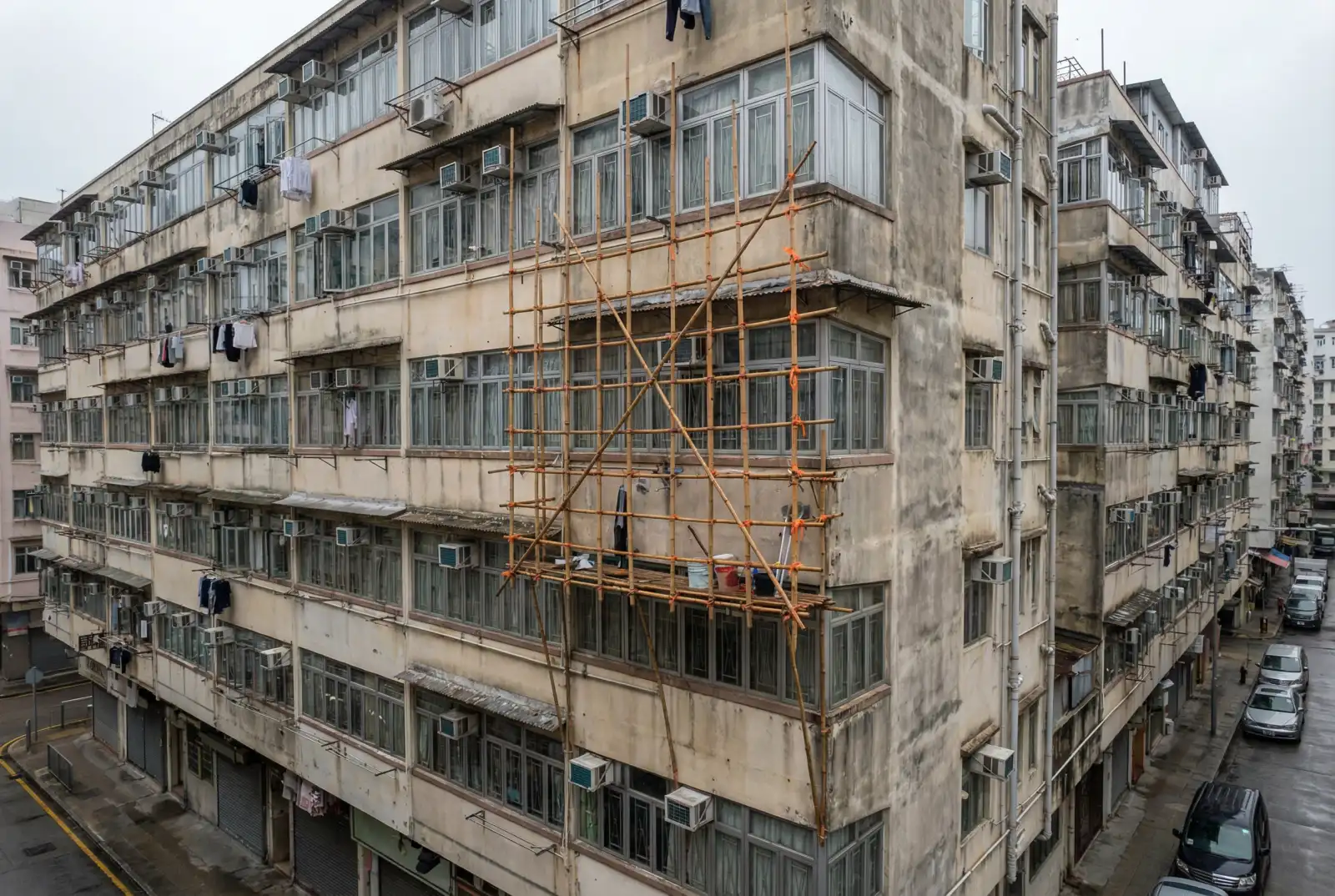
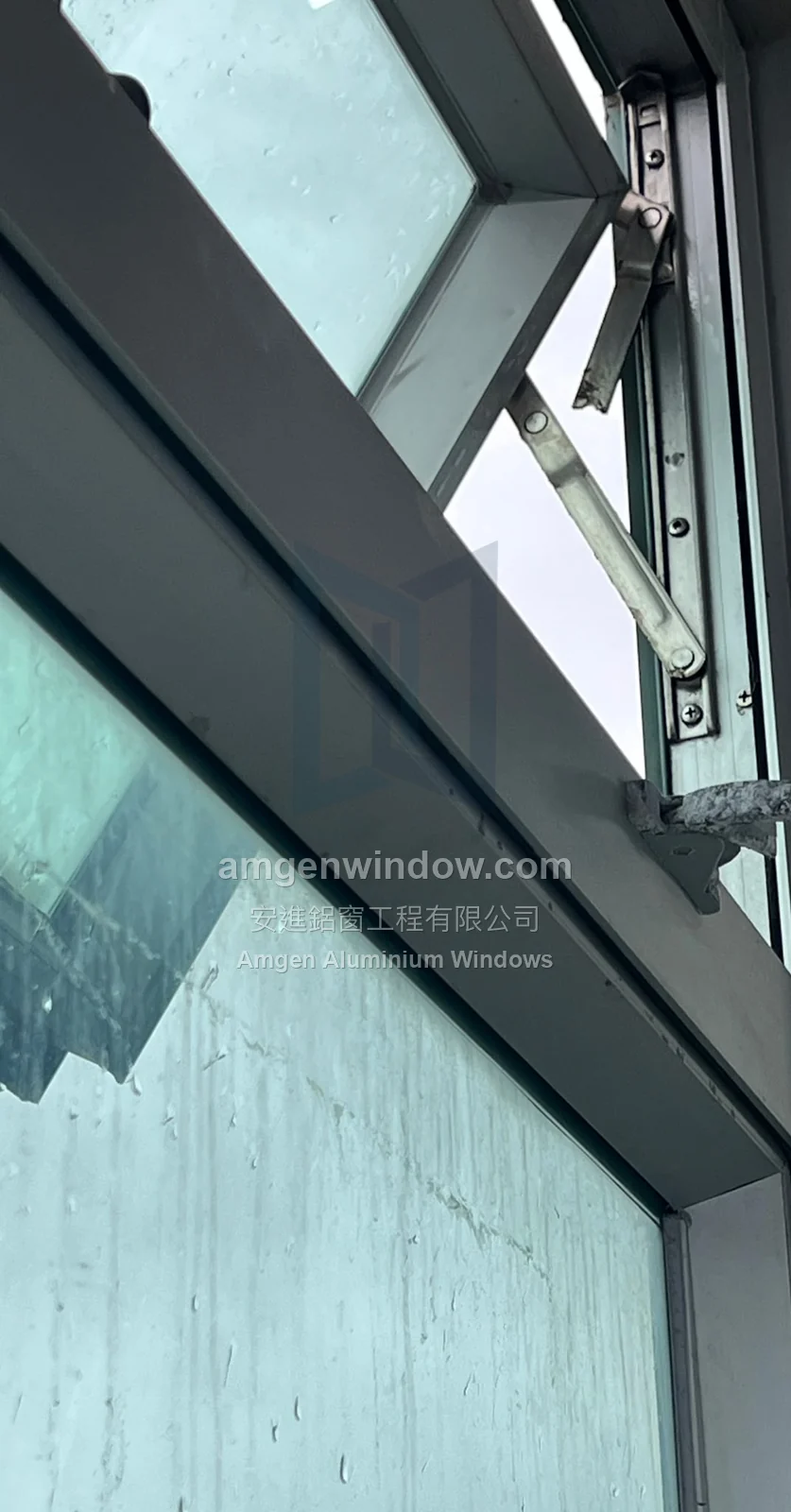
An owner in a Quarry Bay commercial building had just completed a full-unit renovation a year earlier, with brand-new-looking windows. Yet just one year later, one window's hinge snapped and the sash could no longer be properly supported.
On inspection, the Amgen technician found that the previous contractor, to cut costs, had used a low-grade industrial (200-series, such as 201) stainless steel hinge. This type has low nickel content, substituted by manganese, and its corrosion resistance and load capacity are insufficient to support the sash long-term; in the windward, high-floor environment of a commercial building, it oxidised and snapped within a year. When the owner renovated, they only saw that the windows looked intact and had no idea the hinges were low-grade hardware.
The technician then replaced the failed hinges with Amgen-brand 304 stainless steel hinges, and checked the hardware and sealing of the remaining windows. This case shows: a window's problems often lie not where you can see, but in the hidden specs overlooked at quotation.
Before Replacing Windows or Renovating, Why Engage a Professional Window Inspector First?
The lesson from the case above is clear: discovering the wrong specs only after renovation is complete costs far more in time and money than getting it right from the start. The most effective way to avoid this is to engage a professional window inspector to check the existing windows and verify the specs before the window replacement or renovation begins.
A professional inspection helps owners:
For private buildings especially, window works fall under the Buildings Department; having a licensed professional inspect and plan before renovation both gets the specs right and keeps the works compliant. Amgen is a Buildings Department Registered Minor Works Contractor (MWC 316/2021) and can provide professional inspection and advice before works begin. For how the overall window replacement cost is made up, see the Aluminium Window Replacement Cost Guide.
Frequently Asked Questions
Is there a big price difference between 40-series and 50-series aluminium windows?
The larger the series and the more material used, the higher the price generally is, but the gap depends on the number of windows and the overall works. Rather than only comparing the unit price of "50-series aluminium window price," also consider the floor level and wind exposure: for high or windward units, choosing 50-series or above is often more worthwhile for long-term stability and durability.
How do I know which hinge grade the contractor is using?
The most direct method is to require the contractor to state the hinge's material and grade on the quote (for example, whether it is 304 stainless steel) and keep a written record. If they are vague, only saying "good material" without writing it down, owners should be cautious. The Amgen-brand 304 stainless steel hinges we use comply with SS212:1998, the Hong Kong Housing Department and QB/T3888 standards — clearly documented and verifiable.
Do commercial buildings or high-floor units have higher hinge requirements?
Yes. The higher the floor and the more windward, the greater the wind pressure and sash weight the hinge bears, and the higher the requirement on material grade. For commercial buildings or high-floor units, 304 stainless steel hinges are recommended, along with regular hardware checks, to avoid snapping in a short time as in the case above.
Conclusion: The Specs You Can't See Are the Key to Durability
Replacing windows can't be about style and price alone. Hidden specs like aluminium thickness and hinge grade are what decide whether a window can safely withstand a typhoon and last a long time. Rather than fixing things after the fact, do the inspection and material selection properly before works begin.
Amgen Aluminium Windows is a Buildings Department Registered Minor Works Contractor (MWC 316/2021), uses Amgen-brand 304 stainless steel hinges, and provides professional window inspection services before replacement to help owners choose the right specs and avoid being caught out. WhatsApp 6586 3435 for a free enquiry, or book a free on-site assessment.
Contact Us Today
Book a free on-site window inspection and quotation — Licensed Contractor MWC 316/2021