

When renovating an older building or carrying out comprehensive maintenance works, many owners plan to replace their windows and carry out waterproofing at the same time — but which comes first? Getting the sequence wrong can leave a brand-new window frame covered in cement residue, or a freshly applied silicone seal damaged before it can do its job. This guide explains the correct order for window replacement and waterproofing, and walks through the most common real-life scenarios Hong Kong homeowners face.
Why Does the Sequence Directly Affect the Quality of Your Works?
Window replacement and waterproofing are two very different types of work, but they overlap significantly in one critical area: the window frame perimeter, the window sill, and the joint between the frame and the surrounding wall. This is exactly where both trades need to work.
Waterproofing works — particularly large-scale external wall projects — typically involve cement rendering, waterproof coating application, and stripping and rebuilding deteriorated plaster. The dust, vibration, and material spatter involved make it almost impossible to protect a newly installed window frame from contamination. If the new frame is already in place, cement residue can coat the edges of the frame, preventing the silicone sealant from adhering cleanly and leaving a gap in the waterproof seal.
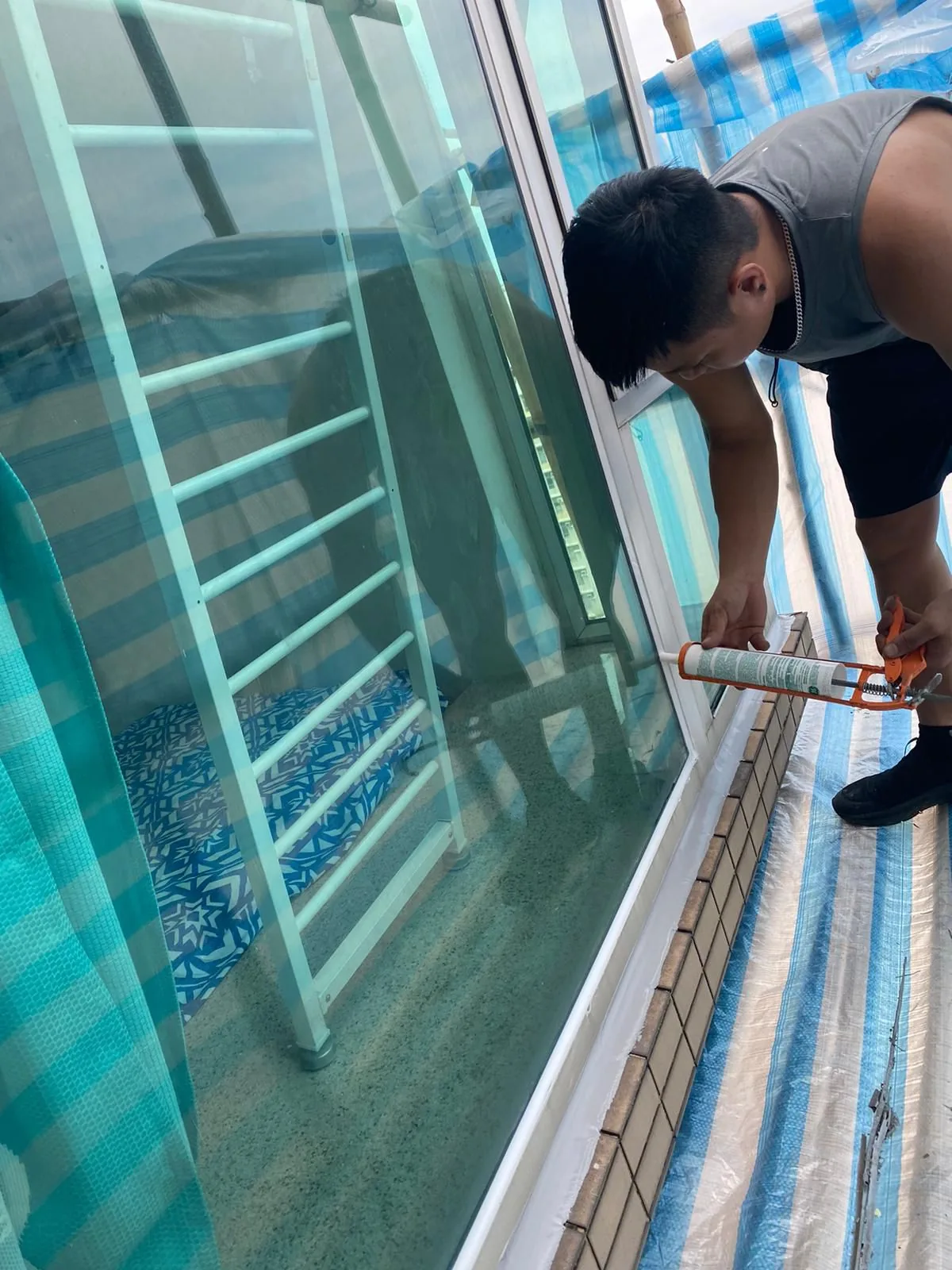
Window replacement ends with the installer applying weatherstripping and silicone sealant around the full frame perimeter — this is the final waterproofing step. If external wall works have not yet been completed, subsequent wall work can easily damage an already-applied silicone seal through vibration or moisture, requiring the work to be done a second time.
Both trades have a "final step" that needs to set and cure before the other trade can proceed. Getting the sequence wrong almost always results in one party having to redo their work.
The General Rule: Large-Scale Waterproofing First, Windows Second
For large-scale external wall waterproofing or facade renovation works — including scaffolding, rendering, waterproof coating, and external wall repair — the correct general sequence is:
Step 1: Complete the external wall waterproofing works Finish the main body of external wall rendering, waterproof coating application, and repair of deteriorated joints around window sills and old frame perimeters. All work that involves modifying the area around the window opening should be completed at this stage.
Step 2: Replace the windows afterwards After the external waterproofing is complete and fully cured, arrange for window replacement. Once the new aluminium frame is in place, a licensed minor works contractor applies weatherstripping and silicone sealant around the full frame perimeter to complete the waterproof seal.
The logic is straightforward: external wall works are larger in scope and require more coordination, and most of that work must be completed before the new window frame is fixed in position. The window installer's silicone sealant application is the final waterproof closure for the whole assembly.
Localised Silicone Resealing: Sequence Depends on Whether You're Also Replacing the Window
Not every waterproofing job is a large external wall project. Many owners deal with localised window leakage or sill seepage and need only to have the silicone sealant reapplied or the weatherstripping replaced. In these cases, the answer depends on whether a window replacement is also planned:
Owners dealing with existing water ingress issues may find it helpful to read the complete aluminium window waterproofing guide first, which covers common causes and cost references for silicone resealing works.
Special Considerations for Scaffolding Projects
If your building requires scaffolding for large external facade works — such as full-building wall renovation in a private development or HOS estate — the project will span multiple weeks and involve several trades. Owners should note the following:
Avoid scheduling window replacement while scaffolding works are active External wall workers need access to the facade from the scaffolding, and window replacement also requires external access. Having two separate teams working at the same location simultaneously creates both safety risks and coordination problems that are difficult to manage.
Wait until the scaffolding is removed before the final window replacement Once external wall works are complete and the scaffolding has been taken down, the final state of the window sills and surrounding wall surface is confirmed. Window replacement can then proceed with accurate measurements and precise silicone sealant application, giving the best long-term waterproofing result.
Government-subsidised projects follow a fixed schedule For works funded through the URA repair subsidy scheme, the works programme is coordinated by the administering authority. Owners must follow the established schedule and cannot unilaterally change the sequence of works.
Real Case: Kowloon Tong Private Flat Owner's Window and Waterproofing Arrangement
A private flat owner in Kowloon Tong — in a building approximately 20 years old — planned to carry out external wall rendering and full-flat window replacement at the same time. The owner initially intended to replace the windows first, but was advised by the contractor that doing so would expose the new frame edges to cement contamination during rendering, and that vibration from grinding and drilling could compromise the freshly applied silicone seal.
Following the contractor's recommendation, the owner completed the external rendering and waterproof coating first, waited for the surface to fully cure, and then arranged for Amgen's team to carry out the window replacement. All works complied with the Buildings Department's Class 2 Minor Works declaration requirements, with Amgen managing the complete documentation on behalf of the owner. The owner found the coordinated approach significantly reduced the overall coordination effort.
Frequently Asked Questions
Q: Is silicone sealant application always required as part of window replacement?
After window replacement, applying weatherstripping and silicone sealant around the full frame perimeter is a required step — not an optional add-on. Omitting it leaves the joint between the frame and the wall exposed to water ingress, which becomes particularly severe during typhoon season.
Q: How long after window replacement can external wall waterproofing proceed?
Once silicone sealant has been applied after window replacement, it generally requires 24 to 48 hours to fully cure before works involving vibration or moisture can proceed. Confirm the curing time with the window replacement contractor before scheduling any follow-on external wall works, to avoid compromising the seal.
Q: Is silicone sealing included in the window replacement cost?
This depends on the scope of the package. Amgen's Four-in-One service (from $250) includes safety hardware replacement, internal and external weatherstripping, and silicone waterproofing — the most complete window maintenance package available. For a detailed cost breakdown, see the aluminium window replacement cost guide, or contact us directly for an accurate quotation.
Plan the Sequence Right — and Get It Done Once
Whether window replacement or waterproofing comes first depends on the nature and scale of the waterproofing works. Large external wall projects should generally be completed before windows are replaced; localised silicone resealing depends on whether a window replacement is also planned. Discuss the full scope of works with your contractor before committing to a programme — this avoids costly rework and ensures both trades are properly coordinated.
To arrange an on-site assessment or enquire about window replacement and waterproofing costs, WhatsApp us at 6586 3435. All works are carried out by licensed contractors (MWC 316/2021).
Contact Us Today
Book a free on-site window inspection and quotation — Licensed Contractor MWC 316/2021